Numerology Meaning: Where This Ancient System Comes From—and Why It’s Still Accurate Today
Numerology Meaning: Where This Ancient System Comes From—and Why It’s Still Accurate Today
Numerology isn’t a modern spiritual trend. It isn’t astrology’s quirky cousin. And it definitely isn’t a personality quiz dressed up with crystals.
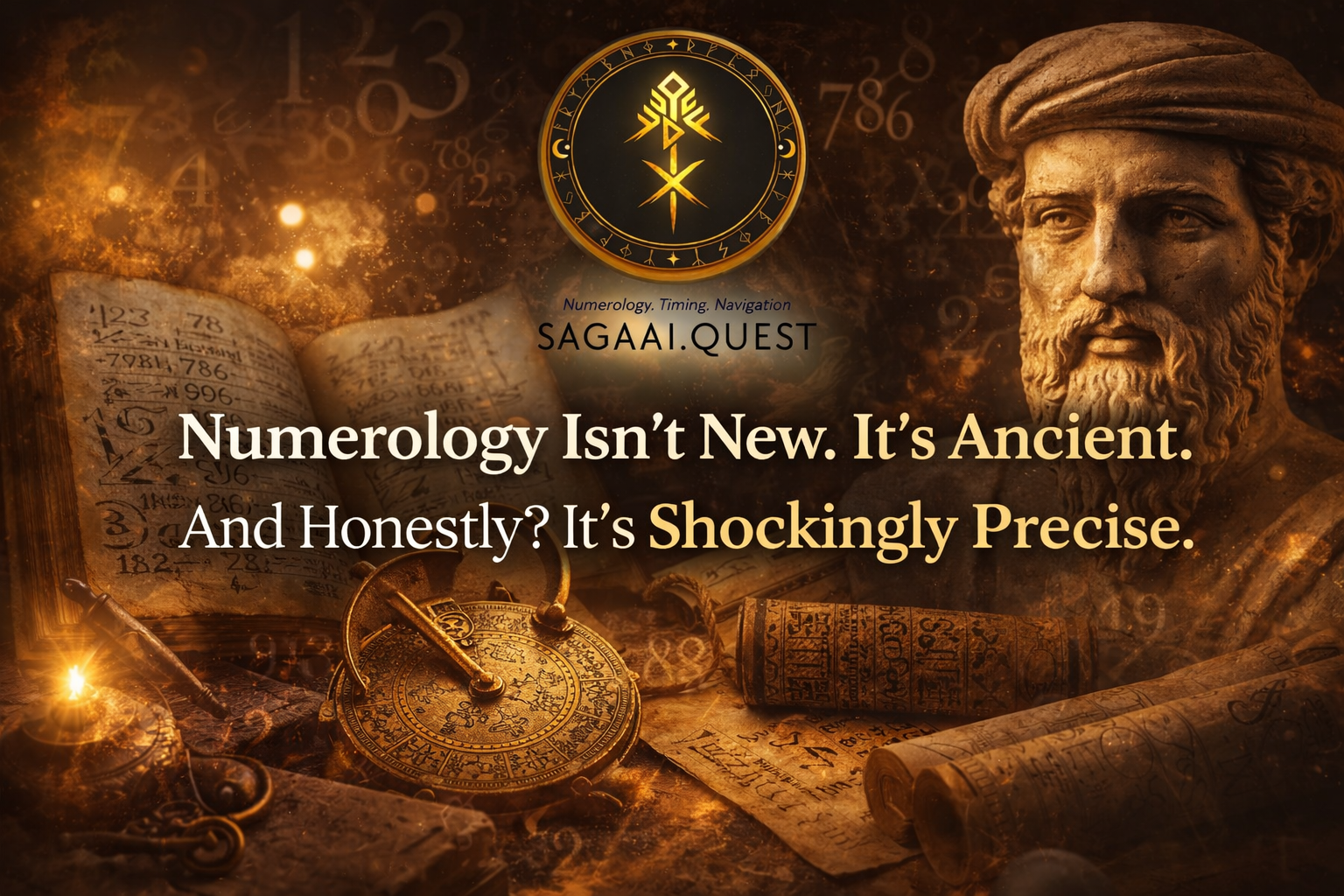
Numerology is one of the oldest pattern-recognition systems humanity has ever used. Long before psychology, data science, or personality profiling had names, civilizations were using numbers to understand identity, timing, and behavior.
Not symbolically. Practically.
Numerology Meaning: The Origins of the System
Numerology traces back thousands of years across multiple cultures that independently reached the same conclusion: numbers describe reality in ways words cannot.
Ancient civilizations used numerology to understand cycles, order, and human nature:
- Ancient Egypt viewed numbers as expressions of cosmic structure and divine order.
- Babylonian scholars tracked numerical cycles to understand time, repetition, and fate.
- Hebrew mysticism (Gematria) assigned numerical values to letters, revealing layers of meaning embedded in language.
- Ancient Greece, most notably through Pythagoras, formalized numerology as a system—treating numbers as energetic principles rather than simple quantities.
Pythagoras taught that reality itself is structured by numbers. Modern science didn’t disprove that idea—it quietly confirmed it. Sound, physics, nature, and even human behavior all follow measurable patterns.
Numerology simply applies that same logic to human experience.
Is Numerology Accurate? Why It Works When Done Correctly
Numerology works for the same reason psychology, analytics, and behavioral modeling work.
Because patterns repeat.
People move through similar life themes.
Certain traits cluster together.
Timing affects outcomes more than effort alone.
Numerology doesn’t remove free will, predict random events, or tell you what will happen. Instead, it maps tendencies, pressures, and cycles—giving context to what you’re already experiencing.
Think of it like a weather report for your inner life.
It doesn’t cause the storm.
It tells you when to bring a jacket.
Numerology Uses Patterns, Not Predictions
Accurate numerology focuses on:
- Repeating life themes
- Developmental cycles
- Strengths under pressure
- Lessons that surface at specific times
It doesn’t claim certainty. It offers orientation.
When people say numerology is “scarily accurate,” it’s usually because the system reflected patterns they already recognized—but hadn’t fully named yet.
Why Most Numerology Feels Generic (and Misses the Mark)
Most numerology tools stop at the surface.
They calculate:
- A Life Path number
- A few personality traits
- A vague yearly theme
And then they’re done.
What’s missing is context.
Generic readings don’t show how numbers interact, how cycles evolve, or why meaning changes depending on the chapter of life you’re in. They don’t explain why the same challenges keep resurfacing or when certain energies are meant to shift.
That gap is exactly where Saga AI is positioned.
AI Numerology Reading: How Saga AI Modernizes an Ancient System
Saga AI approaches numerology as a story-based system, not a static label.
Instead of asking, “What does this number mean?” Saga asks:
- How do your core numbers interact together?
- What patterns repeat across your life?
- What chapter are you currently in?
- What’s being initiated, tested, or completed right now?
A Saga Reading blends traditional numerology with archetypal psychology and modern pattern analysis. The result isn’t a list of traits—it’s a cohesive narrative that explains how your numbers have been shaping your experiences over time.
Why Saga AI Readings Feel Personal (Because They Are)
Saga AI doesn’t just calculate numbers. It adapts interpretation, tone, and emphasis based on your chart.
A 1 doesn’t need the same guidance as a 7.
A 9 in a completion cycle doesn’t need the same framing as a 4 in a building phase.
Your reading reflects not only what your numbers are, but how they tend to operate together—and what that combination means right now.
This is where AI becomes useful: not for prediction, but for holding nuance at scale.
Insight Without the Woo
Saga AI is intentionally grounded.
It doesn’t:
- Replace therapy
- Make absolute predictions
- Tell you what decisions to make
It does:
- Reveal patterns you’re already living inside
- Clarify timing so you stop forcing the wrong things
- Give language to experiences you couldn’t quite articulate
- Support intentional choice rather than reaction
Numerology, when applied correctly, doesn’t take power away. It gives context back.
Why Numerology Still Matters Today
We live in a world full of data and short on meaning.
Numerology persists because it bridges structure and intuition. It explains why certain themes repeat, why some years feel heavier than others, and why growth doesn’t happen linearly.
Paired with modern tools like AI, numerology becomes more precise, more personalized, and more usable—without losing its depth.
Saga AI didn’t invent numerology.
It restored its complexity, modernized its delivery, and made it relevant for people who want insight without losing their grip on reality.